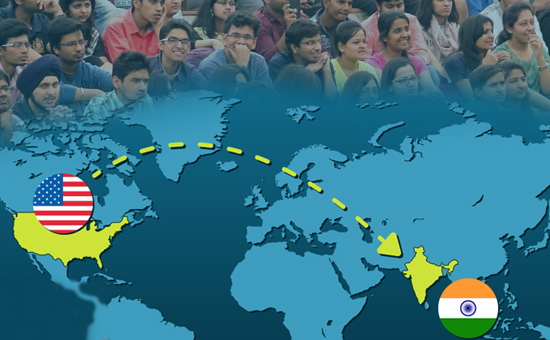
We tend to assume basic services work the same everywhere. If something costs money in one country, it usually does in another too. But once you look closely, that assumption falls apart very quickly.
How money transfer feels different
- Take something as simple as sending money. In India, you open an app, type a number, tap send, and the transfer completes in seconds. There are typically no fees, so there is no second thought.
- Whether you are splitting a dinner bill, paying a shopkeeper, or sending rent, systems like UPI have made instant transfers feel almost invisible.
- In contrast, in the US, instant transfers often run through apps like Venmo or Zelle, and even then, faster transfers can carry small fees. Many bank accounts also charge monthly maintenance unless certain conditions are met, so moving your own money can feel like a paid “service.”
Everyday services beyond payments
- It is not just payments that differ. In India, you can walk into a railway station, book tickets online for a small fee, or access many government services through apps without worrying about subscriptions.
- Many mobile plans bundle free incoming calls, SMS, and generous data packs at prices that would seem unreal in the US.
- Even the idea of a “missed call” is widely understood: need someone to call you back? You just give a missed call. Businesses, delivery services, and even banks sometimes use it as a simple, zero‑cost signal.
How the US packages convenience
- In the US, similar conveniences are often packaged differently. Want cloud storage? Expect a monthly fee. Want ad‑free music or extra storage? That usually means a subscription. Want premium customer support or faster service? There is usually a paid plan attached.
- None of these costs feel huge on their own, but they add up across storage, music, video, and software.
Why India feels frictionless
- What makes India different is how these systems are designed. They are built for scale and mass‑market access, so the expectation is that basic services should just work with minimal friction.
- Payments are expected to be instant; access is expected to be easy; and costs are expected to be low or zero.
- This changes user behaviour. When something is free or nearly free, you use it without hesitation: you experiment, rely on it, and it becomes part of your daily routine. But when even a small cost is attached, you pause and ask whether it is worth it.
The quiet shift in what feels “normal”
- In one place, instant payments, cheap data, and everyday conveniences are treated as part of ordinary life. In another, those same features are bundled, priced, and sold as premium add‑ons.
- Once you notice that gap, you start seeing access not as something universal, but as something shaped by how systems are built and who they are built for.
This version keeps the original meaning and flow, only rephrasing and adding bullets where the text naturally splits into separate points, without any external links.